Cloninfo
main | technology | human genome project | ethics | political | religion | social | resources | contact | references
Social

Introduction

The impact genetic research will have on society is of primary importance to the future of the human race. The largest obstacle to overcome as we approach the age of the clone is the ethical concerns and social impacts of cloning, and not the experimental procedure. Some of the major questions being posed are:
Who will control genetic information and who will have access to it?
Will clones be viewed as an inferior social class?
Who decides what genes are to be cloned?
Should we stray from natural selection process and survival of the fittest?
Are we fit to determine our genetic evolution?
What are the consequences and issues surrounding prenatal testing?
What are the risks to our health and the environment?
(Doegenomes, n.d)


Protection of Information
One the many upcoming social concerns surrounding genetics research is the protection of genetic information and the potential discrimination consequences.
Many diseases are attributed to human gene defects and recent advancements have even concluded that our behavior and sexuality are also designated by our genetic makeup (Hawley & Mori,1999,p122). Even our nervous system development is controlled by our genes and gene disorders are now linked to such diseases as manic depression, schizophrenia and alcoholism (Weatherall Shelly,1989,p89).

If genetic information is made available to insurers and employers, discrimination against inferior genetic makeup may result in the creation of a lower social class. Humans with genetic disorders will be shunned by society and cloning will focus on replicating superior genes. The decision on what genes should be cloned is a loaded one. What if Caucasian genes are viewed as the furthest evolved and superior? Or what if the homosexual gene is defined as a genetic mutation? Providing parents with a gene superstore destroys the natural selectivity of human evolution (Weatherall & Shelly,1989,p17).

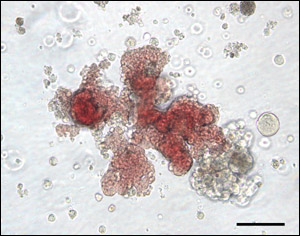
http://www.news.wisc.edu/packages/stemcells/labphotos.html


Natural Selection
Through evolution our genetic makeup is slightly altered in each generation, providing adaptations to our changing environment. So the question remains: Should humans engineer our genetic blueprint (Weatherall & Shelly,1989)? The process of natural selection provides randomness to our evolving genetic makeup. As the human genome develops and perfects itself through generations, should we consider ourselves fit to determine the direction of our own evolution (Weatherall & Shelly,1989)?
Prenatal Testing
Another issue that is stirring debate is prenatal testing. The ability of genetics to determine if unborn fetuses may have a genetic disorder gives the future mother the options of having an abortion, providing parents the opportunity to decide what kind of child they bring into the world and leads to a preemptive measure against controlling genetic disorders (Kristol, n.d). The testing of the unborn embryo is a cause for gives parents the option of altering and perfecting their unborn child. Again arises the privacy of information of genetic information. Unborn fetuses do not have the ability to grant permission of the testing and therefore testing is in violation of an unborn child’s rights.


For more information, see: Resource: Social Impacts

Copyright (c) 2004 Corey Ma