
Introduction
Cloning is often associated with science fiction films and aliens; however clones in fact walk among us. Not clones from a laboratory or outer space, but clones that have occurred naturally as identical twins (Pence, 1998). Identical twins are formed by the splitting of a fertilized egg into two. The halves of the egg have identical genetic makeup, as do clones, but the process is natural. The creation of a clone, however, is an intentional copying of cells to duplicate a specific genetic makeup. Cloning offers much more control over the process, and advances in cell technology even allow the creation of identical twins who are forty years apart in age. The specific details of the cloning process are extremely complicated and require years to fully understand, but the basics can provide an insight into the process of and the issues surrounding cloning. Current cloning techniques take advantage of a cell’s natural ability to reproduce and multiply. The basic techniques of cloning are nuclear transfer, Roslin technique, and the Honolulu technique (About, n.d). These techniques provide a means to not only clone all living things but also combat multiple diseases.
Reproductive vs. Therapeutic Cloning
Biotechnology has many fields of research, however, two main areas of research are reproductive cloning and therapeutic cloning (ARHP, n.d). These two methods apply very similar techniques of replicating cells, however, differ in their purposes and debates.
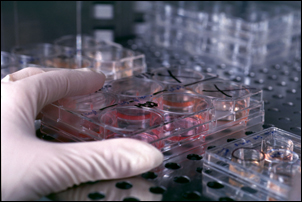
The Association of Reproductive Health Professionals (n.d) describes reproductive cloning as a process to create “a fully formed living child”. Reproductive cloning is accomplished by inserting a clone embryo into a woman’s womb where it will grow and progress through development normally. The ARHP distinguishes therapeutic cloning from reproductive cloning based on this difference. Therapeutic cloning uses the clone embryo as the source of stem cells. In therapeutic cloning the embryo is not implanted in a womb, but is nurtured and grown in a petri dish. The largest use of therapeutic technology is stem cell research. The ARHP (n.d) advocates that stem cells “allow the creation of tissues or organs” that can be transplanted to a recipient in need (ARHP, n.d). The distinct advantage of stem cell therapy is that the clone organ can be transplanted to a patient “without having these tissues or organs rejected by their body's immune system” (ARHP, n.d).
The following sections will describe the current techniques of creating these clone embryos. It is important however to distinguish between therapeutic and reproductive cloning.
Natural Splitting Cells
The base building block of life is the single cell. Inside a single cell is an array of subsystems, operating in unison with each other, performing specific tasks vital to the cell
(Coppel & Nossal , 2002). Although each subsystem is essential to the cell, the nucleus is the most important of them all. The nucleus is the control center of the cell where it sends instructions to each contributing system. The nucleus also has the ability to reproduce itself by a process called mitosis (Coppel & Nossal , 2002). During mitosis a single cell splits into two cells having identical genetics. The ability of cells to reproduce replica cells created the vision for scientists worldwide of the possibility of manufacturing clones in laboratories.
| 
http://www.news.wisc.edu/packages/stemcells/labphotos.html |
In 1902 Hans Spemann successfully split two cells from a salamander in half creating two separate cells. Each cell grew into adult salamanders. This was the first research of its kind to suggest that two separate organisms could be created, each having the identical genetic information (About, n.d). Spemann’s research disproved previous theories that each cell division decreased the amount of genetic information per cell. In fact each cells programming has enough genetic information to initiate the creation of higher order life forms (Coppel & Nossal , 2002). The capacity of each individual cell to multiply and build larger forms of life unravelled the true complexity of our living existence.
Somatic Cell Nuclear Transfer Technique
|
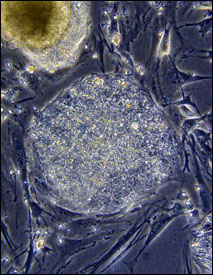
This process involves the transferring of a nucleus from a somatic cell to an egg cell. A soamtic cell is defined as any cell that exists in a body excluding germs. Somatic cells could be a blood cell or a cell from any organ (About, n.d). The somatic cells nucleus is transferred to an egg that has had it’s nucleus removed. The implanted egg cell is then nurtured and allowed to multiply until it develops into an embryo. The embryo is then inserted into a surrogate mothers uterous where it continues to grow.
| 
www.news.wisc.edu/packages/stemcells/ |
Advancement in cell research led to the development of nuclear transfer between cells to create clone embryos. Biologist John Gurdon, using the nuclear transfer technique, successfully cloned South African frogs (About, n.d). Interestingly the transferred nucleus came from an intestine cell of an adult frog. Gurdon proved that each cell’s nucleus contains the blueprint to create the larger form of life even after specialization; these master architectural blueprints exist as DNA molecules inside the nucleus (Coppel & Nossal , 2002).
|
The Roslin Technique
The Roslin technique is a modification of the somatic cell nuclear transfer method. This method allows somatic cells to multiply and grow. The cells are then deprived of all nutrients, forcing them into a dormant stage (About, n.d). An enucleated (removed nucleus) egg is then brought in contact with the somatic cells where it attaches to a cell. The egg is then grown into an embryo that can be implanted into an uterus.
|
The Honolulu Technique
The Honolulu technique uses the transferring of a somatic cells nucleus into a nucleus free egg cell. Chemicals are then used to promote growth of the egg into an embryo. The resulting embryo will then be transplanted into a surrogate mother’s uterus.
|
Application of Technology
Prenatal testing is on the leading edge of the genome debate. Should parents be given the right to know their baby’s genetic makeup quality? Should abortion be allowed of children with genetic disorders (Lee,1991,p190)? Gene therapy ultimately lead to the cure of genetic diseases. This is where correct genes can be implanted into cells to provide the needed proteins to prevent genetic diseases (Hawley Mori,1999,p342). Gene therapy may have a use in treating some genetic disorders such as cancer.
Cloning is a leading controversial issue today with many sides and points of views. The capabilities of cloning are not well known amongst the public and ethical issues seem to be unsurpassable. Major obstacles facing cloning today are religious beliefs, bioethics, natural selection theory, and the potential harm it may cause to genes. However there is support, for cloning, as it has the potential of helping infertile couples, preventing genetic diseases, stem cell therapy, and reducing the rate of aging (Pence,1998).
For more information, see: Resource: Technology
Continue to: The Human Genome Project
|
|


